Practical AI in Schools: Start Small, Measure, and Protect Students
3/4/2026
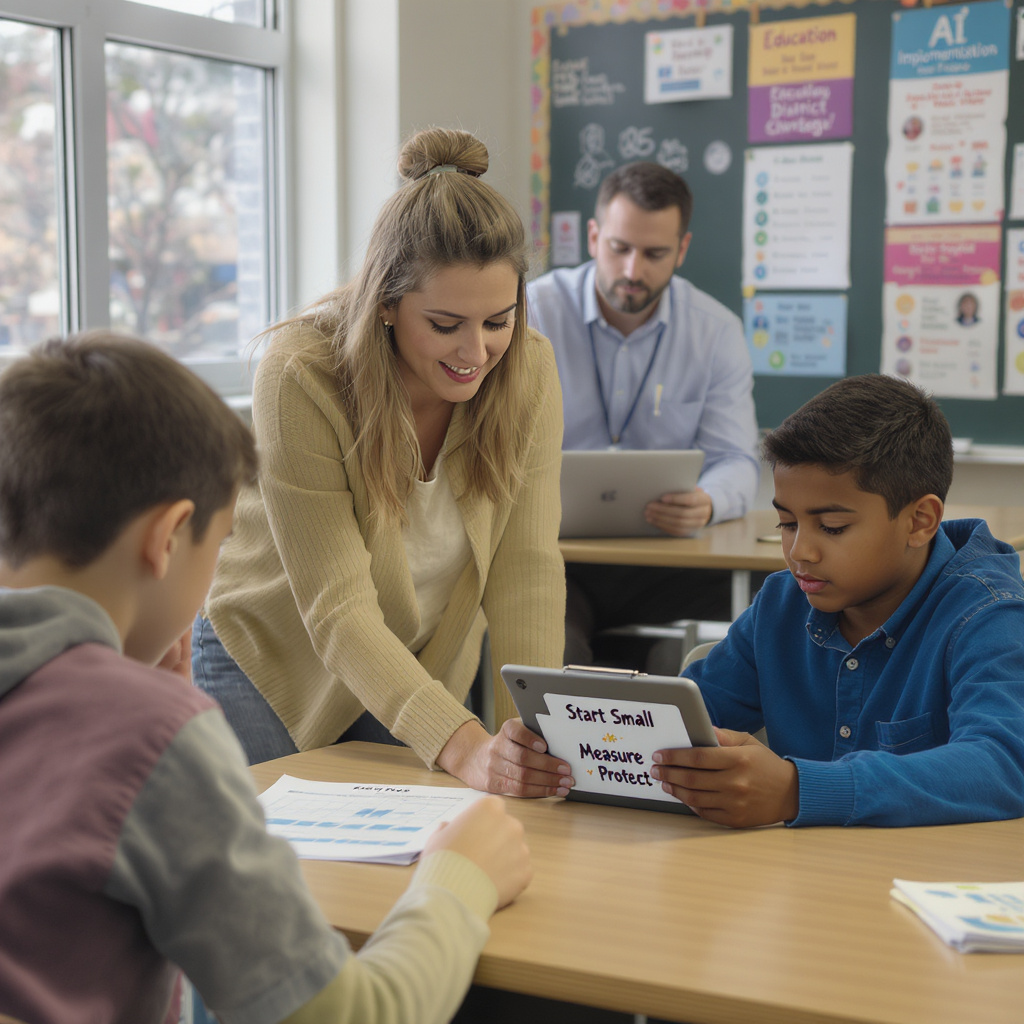
Main point: AI can produce real classroom gains when used to serve clear instructional goals, launched as small, measured pilots, and governed with human oversight and privacy protections.
Key benefits and evidence:
- Personalized learning: Adaptive systems adjust practice, feedback, and pacing so students receive scaffolded drills until mastery (research shows meaningful gains when instruction is tailored).
- Reduced administrative load: Automating routine tasks (grading short responses, progress summaries) frees teachers for higher‑value instruction and relationship‑building.
- Better resource allocation: Analytics surface where supports are needed so districts deploy tutors and specialists more equitably and efficiently.
Practical next steps (what to do first):
- Start small: Pilot a single, narrow use case (e.g., adaptive practice in one grade or automated formative quizzes) with a defined timeline and 2–4 KPIs.
- Define success: Choose student‑centered metrics (short‑cycle mastery gains, engagement, minutes saved for teachers) and document a clean baseline.
- Data readiness & privacy: Inventory SIS/LMS data, require minimal fields, run quality checks, map consent, and enforce encryption and DPA terms (FERPA/GDPR aligned).
- Professional development: Provide just‑in‑time training, micro‑modules, and coaching; create feedback loops for teacher input.
Safeguards and governance:
- Bias & fairness: Use disaggregated metrics, lightweight bias audits, and stakeholder review panels to surface problems early.
- Explainability & human‑in‑the‑loop: Dashboards should show key signals behind flags and let teachers confirm or override recommendations.
- Ethics frameworks: Align pilots with standards (for example, IEEE or UNESCO recommendations) and publish family‑facing summaries of data use and opt‑out options.
Evaluation & scaling: Use mixed methods—quantitative baselines with comparison groups or phased rollouts and rapid qualitative feedback from teachers and students. Schedule 30/60/90‑day checks and longer 6/12/24‑month learning reviews. Expand only when targets, adoption, and equity checks are met.
Quick wins & selection checklist:
- Automated formative quizzes with instant feedback.
- Reusable feedback templates for writing to reduce comment time.
- Auto‑tagging assignments and short AI‑generated parent summaries for conferences.
- Require curriculum alignment, minimal data collection, editable teacher controls, and clear ROI before procurement.
Classroom example & tips: In a grade‑7 algebra module, adaptive practice can offer scaffolded hints after patterned errors, return students to mixed problems at mastery, and prompt a teacher cue to reteach. Verify vendor claims with peer‑reviewed studies, independent evaluations, and local pilots—small, measured experiments turn curiosity into real classroom improvement.