AI-Powered Digital Twins: What, Why, How, What If
7/6/2026
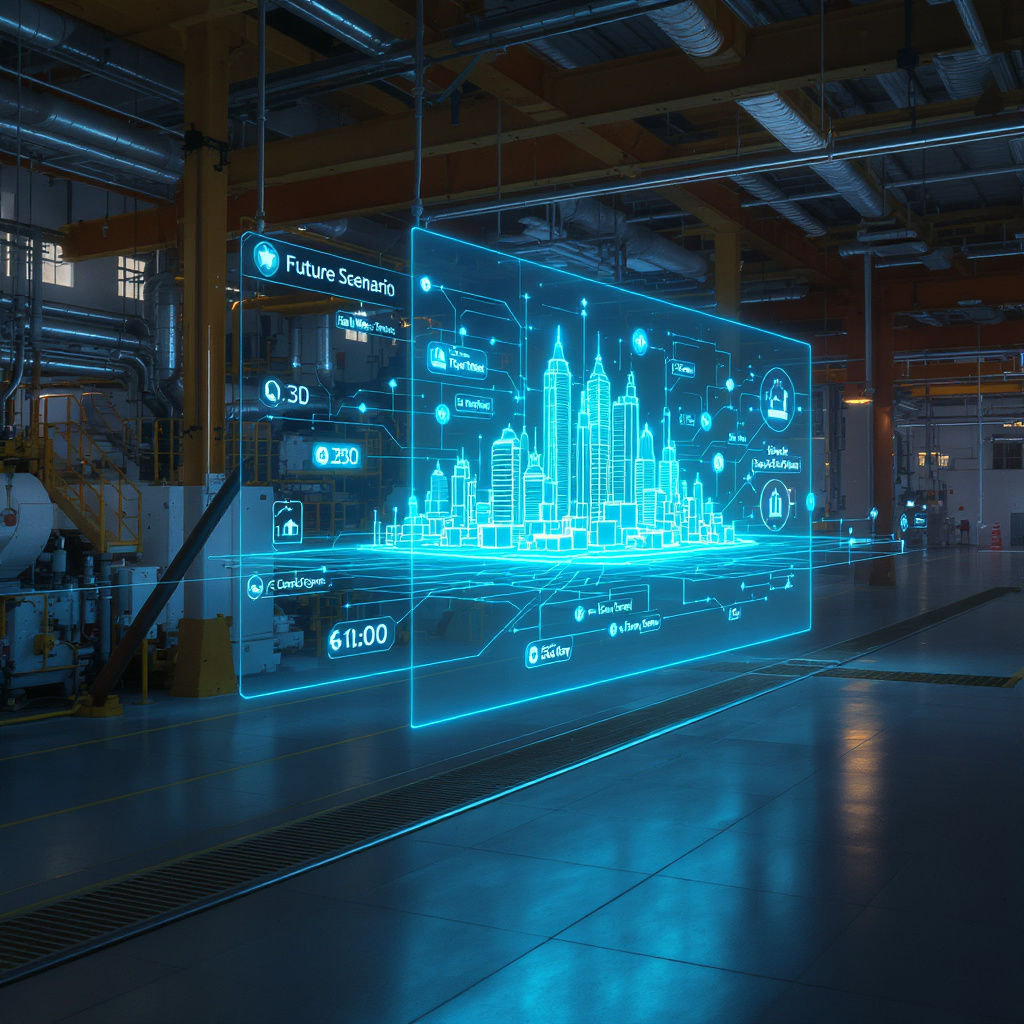
What: A digital twin is a living, data-connected model of a physical asset, process, or system. “Living” matters because the twin doesn’t sit on a design drawing or a one-time simulation—it keeps reflecting real-world conditions as new data arrives. Sensors, logs, and events continuously update the model so it stays aligned with reality.
In plain terms, a twin helps you move from “we think we know what’s happening” to “we can continuously understand what’s happening now—and what it likely means next.”
Why: Digital twins matter because they reduce drift between models and reality. Static models can become outdated as equipment wears, operating modes change, weather shifts, or recipes evolve. A continuously updated twin keeps your understanding current—so you can:
- Predict performance and degradation
- Detect anomalies and early failure signals
- Recommend actions with operational context
- Test “what-if” scenarios before changing the real system
Where AI strengthens the twin is in turning complex telemetry into actionable intelligence. Raw signals are often noisy, incomplete, or too complex for simple rules. AI can identify patterns, forecast likely outcomes, detect unusual behavior, and assist with summarizing maintenance evidence (including from unstructured notes).
How: Build an AI-powered digital twin in an evidence-driven loop—so it stays trustworthy, not just impressive.
1) Connect the right data (the twin’s “memory”)
- Sensor streams (vibration, temperature, flow, current, pressure)
- Operational signals (start/stop cycles, operating modes, recipes, workload levels)
- Maintenance records (parts replaced, calibration/inspection dates, outcomes)
- Events and logs (alarms, state changes, software/firmware updates)
Tip: Context is as important as volume. The twin needs to tie “what happened” to “what changed.”
2) Model the system with the right balance (physics + learning)
- Physics-based simulation provides grounded behavior and constraints.
- Data-driven modeling captures effects that physics alone can’t represent well.
- Hybrid approaches use physics as a baseline while AI learns residual patterns and corrects discrepancies as evidence arrives.
3) Apply AI for specific jobs
- Forecasting (remaining useful life, throughput impact, energy demand)
- Anomaly detection (flag deviations by operating mode and prioritize likely causes)
- Classification (map symptoms to asset states or failure modes)
- NLP support (extract structure from maintenance tickets, summarize evidence, link text to sensor timelines)
4) Engineer the feedback loop (this is what makes it “living”)
- Continuously compare predictions against real outcomes.
- Update thresholds and models when drift appears (new batches, firmware updates, recipe changes, sensor shifts).
- Refine state representation after reality changes (part replacement, configuration updates).
5) Operationalize it (turn outputs into actions teams can trust)
- Route signals to maintenance planning (timing, inspection priorities, risk levels)
- Enrich alarms to reduce noise and shorten troubleshooting time
- Integrate with CMMS/EAM or ticketing so recommendations become work orders
- Include explainability so recommendations show the “why” (key contributing signals, operating mode comparisons)
What-if don’t want to go further (or what if you don’t)?
If you stop at dashboards or one-time simulations, you typically lose the core advantage: the model drifts away from reality. The consequences often look like this:
- More false confidence because alerts aren’t recalibrated after changes
- Higher false alarms when operating recipes or equipment conditions shift
- Slower troubleshooting because the system can’t correlate evidence across time and assets
- Hard-to-scale programs due to fragmented data, inconsistent schemas, and missing governance
If you want to go further, the next maturity steps are usually:
- AI-native twins that automate calibration and validation using fresh data
- Self-healing workflows that detect data quality degradation and route to fallback models
- Human-in-the-loop design for safety-critical decisions and clear approval/escalation paths
- Interoperability and versioned data contracts so the twin can scale across systems and vendors
Best for: This framework is ideal for educational blogs, thought leadership, and explainer content—especially when you want readers to understand both the concept and the practical operating loop behind AI-powered digital twins.
Fact-check note: When evaluating performance claims, look for credible pilots or case studies with clear baselines and evaluation methods. Ask for the operating conditions, dataset/time windows, how errors were measured (e.g., forecast MAE/RMSE; anomaly precision/recall), and how model improvements translated into outcomes (reduced MTTR, reduced unplanned downtime, confirmed energy or scrap savings).